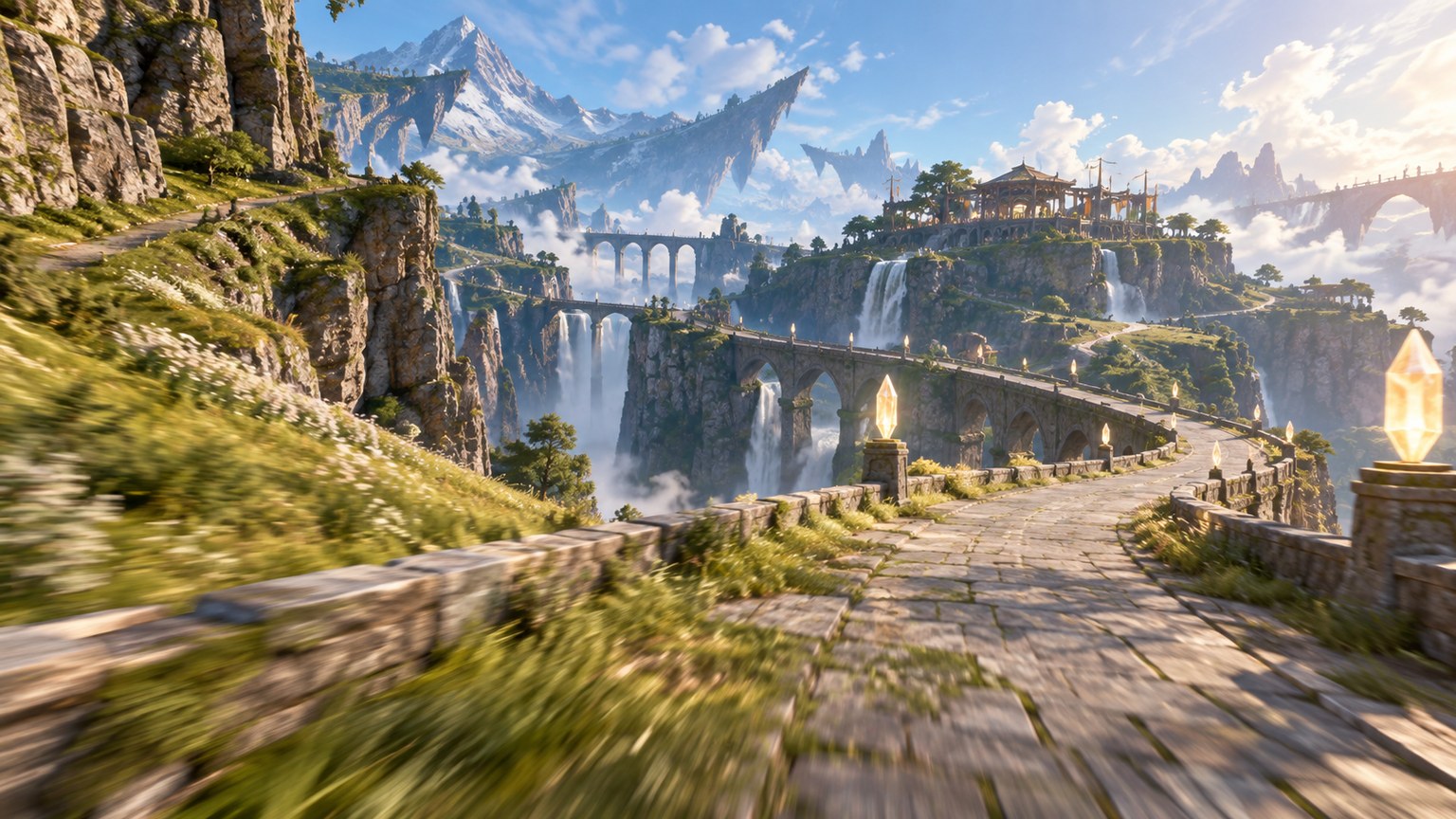
Animal and Vehicle Mounts in Action/Adventure Games: Freedom and Fun
Animal and vehicle mounts make action/adventure games feel larger, faster, and more expressive. Horses, bikes, ships, mechs, gliders, cars, creatures, and flying machines can turn travel into a memorable part of the adventure.
A: They also change route choices, travel rhythm, preparation, and sometimes companionship.
A: Confined spaces and close investigation may benefit from a slower, more precise approach.
A: Review available fuel, condition, the planned distance, and your return options.
A: Expressive movement and understandable controls can coexist.
A: No; available travel modes depend on the particular game's rules.
A: Ground barriers lose influence unless the new travel mode introduces worthwhile alternatives.
A: Choose according to the recurring limitation you want to address.
A: Consider the supported actions, available space, and the encounter's demands.
A: Try a full journey involving exploration, dismounting, retrieval, and the return ride.
A: Its recurring presence and relationship to your travels can matter beyond its statistics.
A horse and a motorcycle can both shorten a journey, but they change it in different ways. One may make the landscape feel like a place you share with a companion. The other may turn the same distance into a calculation about fuel, damage, and where you can stop safely. Speed is only the most obvious part of the experience.
In action/adventure games, animal and vehicle mounts sit between the character and the world. They affect which routes look inviting, how danger approaches, and when you choose to dismount. The most enjoyable examples give travel a distinct character while leaving the places you pass through worth noticing.
Riding changes the size of the journey
On foot, a distant settlement can suggest a long sequence of small obstacles. On a mount, the road between here and there becomes a larger, more continuous space. You read bends, crossings, and slopes rather than every patch of ground. The destination may stay the same while the journey’s rhythm changes.
That is one reason a mount can make a large map feel inviting. A visible landmark stops being merely something you might reach eventually. It becomes a destination you can choose for the current session. The player’s willingness to investigate can expand when travel feels manageable.
However, shrinking travel time is not the same as making travel interesting. If the fastest approach consists of holding one direction through empty scenery, the mount may reveal how little happens between destinations. The world needs something appropriate to the new pace: readable terrain, encounters, choices, or simply views that reward attention.
Imagine two hypothetical roads leading to a ruined tower. The valley route is broad and easy to follow but passes through a busy crossing. The ridge is less direct, with tight turns and a useful overlook. Riding makes the comparison about more than distance. You weigh exposure, handling, and what you could learn along the way.
A good mounted journey also has reasons to slow down. A suspicious campsite or unfamiliar sound should be recognizable before it disappears behind you. The player needs enough time to decide whether to continue, turn back, or leave the mount and investigate.
For your own play, choose a destination for one outing instead of treating every ride as a sprint toward the nearest marker. Notice how the route shapes the trip. A mount feels more meaningful when you can remember the crossing you approached carefully or the detour that became a discovery.
An animal can become part of the traveling party
Ghost of Tsushima’s developers describe Jin’s horse as his partner in the journey, and the game gives players an early opportunity to choose their horse. That framing matters. The mount is associated with the protagonist’s adventure rather than presented only as an interchangeable speed upgrade.
A recurring animal can acquire familiarity through ordinary use. You recognize its movement and presence across many trips. Even a quiet stretch between missions can reinforce the sense that this is the creature accompanying you through the world. Emotional attachment does not require every ride to include a special story scene.
Animation contributes to that impression when it makes the animal appear to occupy the terrain. A turn, a stop, or a change of gait can communicate more than a shift in velocity. These details make the ride feel embodied, provided they still allow the player to steer with confidence.
There is a balance between personality and frustration. A creature that reacts can feel alive; a creature that repeatedly ignores readable input can make basic travel tiresome. Players should be able to distinguish an intentional limitation from a control problem. The appearance of independence works best when the interaction remains understandable.
Care systems can deepen the relationship in games that include them. Feeding, tending, or protecting an animal gives the player a role beyond directing it. But those actions need a fitting frequency and consequence. A repetitive chore performed at every departure may draw more attention to the interface than to the creature.
When selecting a game for the appeal of its animal companion, look for how the mount appears during normal travel. A dramatic trailer moment says little about the hours between major scenes. Ask whether you enjoy the pace, responsiveness, and everyday presence that will make up most of the relationship.
A vehicle can make freedom depend on preparation
Days Gone takes a different approach with Deacon’s Drifter bike. Bend Studio’s guidance emphasizes finding fuel, scavenging scrap for maintenance, and upgrading the motorcycle at encampments. The bike offers mobility, but that mobility has conditions the player must manage.
This makes a departure feel like a commitment. You consider whether the machine can carry you through the planned outing and whether you can recover from trouble. A route is no longer judged solely by where it leads. The resources needed to complete it become part of the decision.
A fuel system is particularly effective when it makes distance tangible. The same map marker can look different with a full tank and a nearly empty one. A nearby place to replenish fuel becomes useful knowledge, not just background scenery. Travel gains an element of planning that walking everywhere would not create in the same way.
Maintenance has to support the adventure rather than repeatedly interrupt it. If the player can understand the vehicle’s condition, identify supplies, and make a sensible plan, a limited resource creates tension with agency. If failures arrive without usable warning or supplies are tedious to locate, the restriction may feel arbitrary.
Upgrades can then change how you approach the world. A larger fuel tank offers a different benefit from a tougher frame or an extra burst of speed. The best choice depends on the problem you keep encountering, not merely on which number looks largest in a shop.
For a practical outing, review the route and the bike’s state together. Think about the return journey as well as the destination. Leave yourself a recovery option where the game permits one, and learn the places that support continued travel. Preparation becomes satisfying when it enables the ride you wanted rather than existing as a ritual with no clear purpose.
The route must suit the body beneath you
A mount’s shape and movement change what counts as a useful path. A rider needs space to turn and enough visibility to read an approach. A vehicle may depend on surfaces or clearances that the on-foot character barely notices. Terrain that is enjoyable to climb can be awkward to cross at speed.
Horizon Forbidden West places machine mounts among several ways to traverse its world. Guerrilla’s account also discusses climbing, grappling, swimming, and gliding. The important relationship is between these options: riding serves part of the journey, while other movement tools address different terrain.
That variety allows dismounting to become a positive decision. You may ride toward the base of a formation and then explore vertically on foot. The mount helped you reach the interesting area without needing to solve every obstacle inside it. Travel and close investigation can have different demands.
Flying mounts, in games that provide them, change the problem more radically. A ridge that once directed ground travel may cease to be a barrier. The world then needs reasons to care about altitude, landing, visibility, or destinations that become newly approachable. Otherwise, the new freedom can flatten earlier route choices.
The same principle applies to boats. Water can become a navigable network rather than the edge of the map, but only if the game actually supports that mode of travel. A visible vessel is not a promise that you can pilot it. Check the adventure’s rules rather than assuming that every appealing vehicle belongs to your movement toolkit.
For designers and players alike, the useful question is where each travel mode becomes interesting. A mount need not be equally good in a village lane, a mountain passage, and open country. Meaningful limitations can give those places character, as long as transitions between modes are clear and reasonably convenient.
Arriving safely is part of mounted play
Speed can carry you into an encounter before you have understood it. A mount may provide escape, transport useful supplies, or support an attack, depending on the game. Those roles are different enough that you should not assume remaining mounted is always the strongest combat choice.
Days Gone’s developers connect the bike to survival through specific parts: a fuel tank supports range, a frame improves durability, and saddlebags provide additional ammunition. This gives the vehicle a role before and around a fight. Its value is not restricted to the moment when you hold the accelerator.
Parking can be a tactical decision in a game where returning to the vehicle matters. Imagine approaching a hostile compound. Leaving your transport beside the entrance makes it convenient but exposed; placing it farther away offers space while adding a longer retreat. The useful choice depends on the encounter’s actual rules.
Mounted combat also changes attention. You may need to steer, track an opponent, and manage distance simultaneously. A fast pass that feels exciting in open ground can become confusing in a cramped area. Learn the available actions somewhere manageable before relying on them during a difficult confrontation.
Camera behavior deserves attention here. If the view repeatedly obscures the path or makes turns difficult to judge, look for relevant settings and try them on a familiar route. Horizon Forbidden West includes a Mount Follows Road option intended to reduce input during longer travel. Such assistance can make the journey more comfortable without deciding whether you want to stop and explore.
Dismounting should leave you oriented. You want to know where the character lands, where the mount remains, and how to resume travel. These ordinary transitions influence whether the mount feels like a welcome extension of play or a cumbersome procedure separating you from the activity you came to do.
Choose a riding experience, not only a faster statistic
Before investing heavily in a mount or vehicle, identify what you want it to improve. Perhaps you enjoy scenic journeys, need help covering ground, want a companion, or like managing a vulnerable machine. Those preferences point toward different features and different adventures.
For scenic travel, look at visibility and the ease of stopping. For a companion-centered experience, notice recurring behavior and the way the game frames the animal. For survival travel, consider whether maintenance and supplies create decisions you enjoy. A system can be well suited to its world and still be a poor match for your preferred evening of play.
A useful test is a complete round trip. Ride out, investigate something, dismount, return to your transport, and travel back. This reveals more than a straight sprint across open ground. It shows how the mount participates in the actual sequence of activities that makes up an adventure.
During that trip, pay attention to the costs of convenience. Can you notice an optional path while moving? Does summoning or retrieving the mount consume more effort than the ride saves? Are upgrades addressing a recurring difficulty, or are you buying them without a reason? These questions help separate novelty from lasting usefulness.
You can also alternate mounted and on-foot travel deliberately. Riding a known road may be satisfying, while walking an unfamiliar ruin preserves the scale and detail of the place. Freedom includes the ability to choose the pace that suits the next stretch, rather than using the fastest available option everywhere.
The memorable mount becomes associated with the journey itself: the animal beside a quiet overlook, the motorcycle prepared for a risky departure, or the machine that brought you to the foot of a climb. It expands what you can reach while giving the act of reaching it a character of its own.