
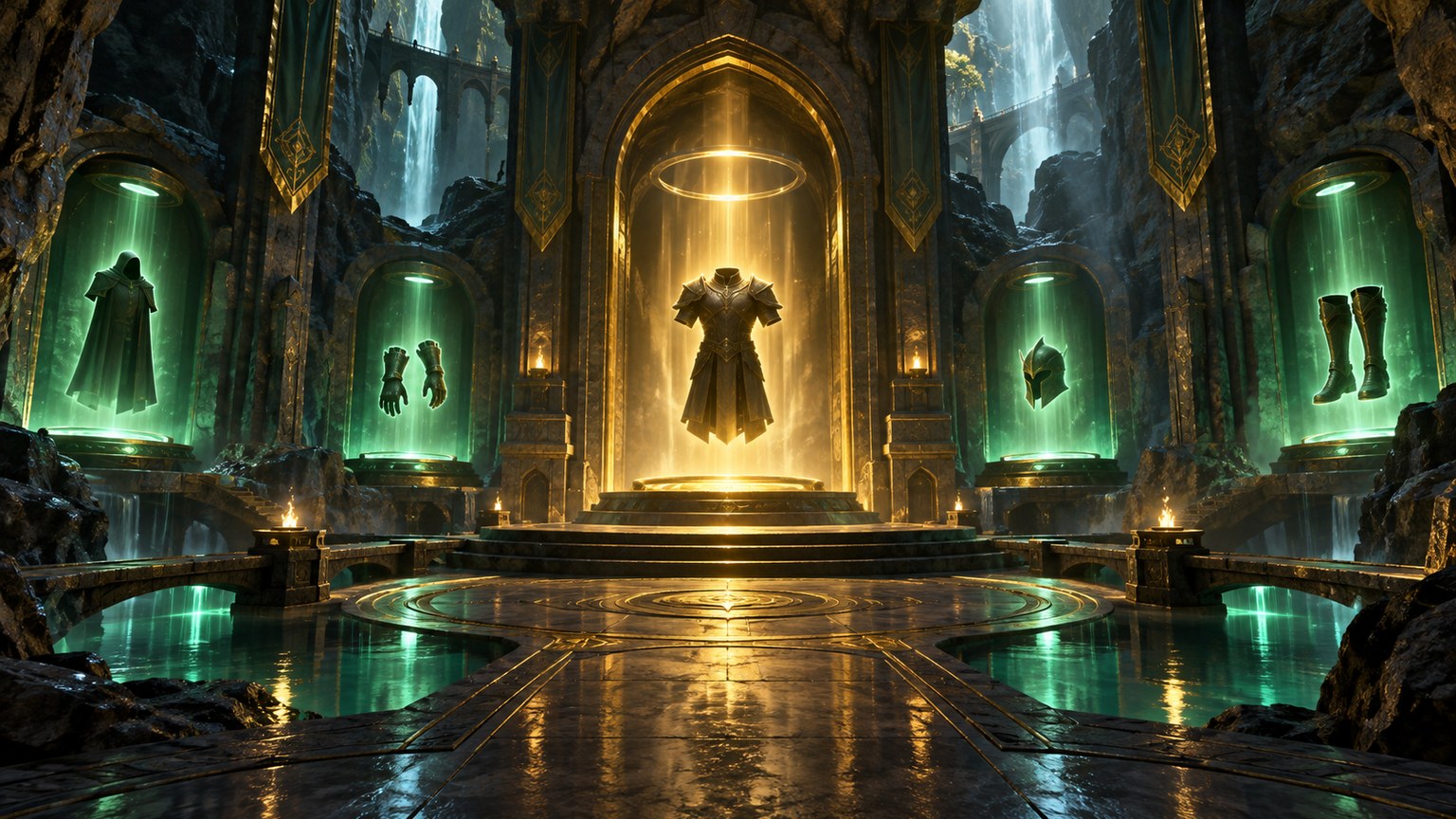
The Impact of Loot and Gear in Action/Adventure Game Systems
Loot and gear shape action/adventure games by changing how players read rewards, difficulty, identity, experimentation, and progress. A sword, armor set, charm, weapon mod, or rare drop can make exploration feel useful instead of decorative.
You open a chest after a difficult fight and find a weapon with a brighter border than the one you carry. Its attack number is higher, but its special effect rewards a move you rarely use. Equipping it feels like progress on the inventory screen. The next battle may tell a different story.
Loot matters in action/adventure games because it sits between two kinds of progress: improving your character and improving your own judgment. Equipment can expand the ways you approach an encounter, encourage an unfamiliar technique, or simply make an existing routine stronger. Those outcomes deserve different responses. Understanding what a reward actually changes helps you spend fewer evenings comparing nearly identical items and more time enjoying the adventure.
A Reward Can Change Your Options or Just Your Numbers
A stronger version of a familiar sword usually offers numerical growth. A weapon that interrupts a charging enemy introduces a tactical option. An accessory that rewards a narrowly timed defense encourages a particular habit. A new outfit appearance expresses personal taste. All four can be worthwhile, but they solve different problems.
This distinction explains why a modest item sometimes feels more exciting than an expensive upgrade. Imagine struggling with enemies that stay beyond your usual reach. Additional close-range damage does little until you can approach safely. A dependable ranged tool may transform the encounter even if its displayed attack value looks unimpressive. Its value comes from the opening it creates.
Movement equipment belongs in the conversation too, although not every adventure treats traversal tools as loot. When a reward grants a new route through the environment, its usefulness extends beyond combat. It can reconnect familiar spaces, shorten journeys, or make an earlier obstacle understandable. Comparing such a tool with a damage increase misses the reason you wanted it.
Before replacing anything, describe the prospective change in ordinary language. “This helps me punish a missed attack” is more informative than “this is purple.” If you cannot explain how the item would affect your next few encounters, there may be no reason to interrupt your current setup.
Read the Condition Attached to the Benefit
The most consequential part of an equipment description is often a small condition: after blocking, while health is low, against an affected target, or during a certain attack. The condition determines whether the advertised benefit becomes part of regular play or remains a possibility you never activate.
Consider two hypothetical defensive accessories. One grants a modest benefit whenever you absorb a hit. The other gives a stronger reward after an accurately timed parry. An experienced player who parries regularly may prefer the second. Someone still learning enemy timing could get more useful support from the first, despite its less impressive promise.
A build can also ask you to behave against your instincts. If you normally retreat to heal, an effect that depends on remaining injured creates a real tension. You must decide whether you enjoy managing that risk. There is little benefit in equipping a dramatic bonus and then spending the entire fight preventing its trigger.
Look for the cost as carefully as the reward. A heavy attack perk may encourage commitments that leave you exposed. An ammunition-focused setup may consume resources you would rather save for difficult targets. Equipment is easier to evaluate when you treat its behavior as a bargain rather than a free improvement.
Horizon’s Workbench Makes Upgrades More Than a Damage Ladder
Horizon Forbidden West offers a useful example of equipment growth changing a tool’s possibilities. Guerrilla’s explanation of its systems describes workbench upgrades that can unlock perks, modification slots, and skills. Weapons also differ through ammunition types, perks, and coil slots. That makes a comparison between two bows more involved than checking their first visible number.
The practical question is what the next upgrade adds to your hunting approach. A development that supports a role you already need may deserve attention before a nominally stronger weapon that duplicates another tool. Read the upgrade preview with your intended loadout in mind, especially when several items compete for the same materials.
Resource collection then becomes part of combat planning. If an upgrade requires a particular component, first investigate how that material is obtained in the game’s own information screens. Your goal may require a different approach from simply defeating the target as quickly as possible. A successful hunt and a productive upgrade run are not always the same thing.
This is where equipment systems can enrich the adventure: the desired improvement gives you a reason to understand the creature, prepare suitable tools, and make deliberate choices during the encounter. The loop becomes less interesting when you repeat it automatically without learning anything or changing your tactics.
When an Early Armor Set Deserves Another Chance
God of War Ragnarök challenges the assumption that equipment found early must eventually become obsolete. Santa Monica Studio states that equipment with a Power Level can be upgraded to Level 9. It also explains that many matching wrist and waist pieces strengthen their shared perk when worn together. An item’s arrival point therefore does not settle its long-term usefulness.
That design gives a familiar setup room to grow alongside your confidence. If its behavior suits how you fight, upgrading it can preserve a satisfying rhythm. A newly acquired piece may offer an appealing alternative without automatically invalidating everything you learned with the old one.
Matching equipment introduces a different tradeoff from choosing individual stat increases. Replacing one piece can improve a visible attribute while weakening the combination that supported your strategy. Before swapping, read the description of the complete setup and the proposed replacement. The comparison screen may emphasize the item while your experience depends on the relationship between several items.
You can still choose variety over a stronger shared effect. Perhaps one piece supports a defensive habit you enjoy while another makes a different action more useful. The important part is recognizing the exchange. A mixed setup chosen intentionally is very different from a collection of impressive items assembled without understanding how they interact.
Test Equipment Against the Problem You Actually Have
An unfamiliar weapon deserves a trial that answers a specific question. If enemies keep interrupting you, test whether the replacement creates safer openings. If you exhaust healing supplies, watch whether a defensive change reduces the dangerous hits you take. If a battle lasts too long, examine damage opportunities rather than judging the weapon from a few isolated strikes.
Change one meaningful part of the loadout at a time when the game allows it. Swapping a weapon, armor, accessory, and combat skill together can produce a better result, but it leaves you uncertain about the cause. A smaller experiment tells you which part of the equipment system is doing useful work.
Use a familiar encounter that remains demanding enough to reveal weaknesses. A trivial opponent will make almost any setup feel effective, while an unfamiliar boss adds too many unknowns. Repeatable practice is especially helpful for effects tied to timing, because you need several opportunities to see whether you can activate them reliably.
Pay attention to ease as well as speed. A setup that wins slightly more slowly but makes recovery predictable may suit a long exploration session better. Equipment should serve the kind of play you want tonight, not only a theoretical maximum demonstrated by someone with different habits.
Spend Materials Where They Remove a Real Obstacle
Upgrade menus can make every unfinished bar look urgent. It helps to separate a current bottleneck from a future possibility. If your preferred weapon is falling behind in encounters you otherwise understand, improving it addresses a present need. Upgrading five unused alternatives mainly satisfies the desire to complete a collection.
Keep the next destination in mind. A long expedition may reward a broadly dependable setup, while a troublesome encounter may justify a specialist tool. You do not need to prepare equally for every imagined situation before leaving the hub. A game with limited materials makes prioritization part of the decision.
At the same time, excessive saving can freeze your progress. Players sometimes preserve every rare resource for an unknown perfect item and endure hours with equipment they no longer enjoy. Learn whether the material can be replenished, whether the upgrade can be reversed, and whether better sources become available later. Those rules vary between games.
A sensible commitment is large enough to make the tool useful and small enough to leave room for discovery. If a new weapon needs a basic upgrade before it can compete, that investment may be necessary for a fair trial. If testing it requires a lengthy resource hunt, ask whether its intended role interests you enough to justify that time.
Count travel and preparation as part of that investment. A seemingly cheap upgrade can involve reaching a distant vendor, gathering several ingredients, and returning through territory you have already cleared. For a short session, a smaller improvement available nearby might leave time for the mission you actually wanted to attempt. During a relaxed exploration evening, the longer gathering route could be enjoyable in its own right. The same upgrade can be sensible on one night and distracting on another. Planning around available time keeps the equipment economy from quietly replacing your reason for loading the game.
The Inventory Is Part of the Adventure’s Pacing
Loot changes the rhythm of a journey even when you never equip it. A chest creates anticipation, an item description invites inspection, and an upgrade material points toward a future return to a workbench. Used thoughtfully, those moments connect exploration with preparation. Used too frequently, they repeatedly pull attention away from the place you are exploring.
There is a difference between choosing to compare gear at a safe stop and feeling obliged to open menus after every pickup. A stream of tiny improvements can make uninterrupted play feel inefficient. The equipment system begins directing your attention toward arithmetic when the adventure may be strongest through movement, atmosphere, or discovery.
Establish a review rhythm that fits the game’s risks. You might inspect equipment after completing an area, reaching a settlement, or encountering a clear difficulty increase. Urgent items can still earn an immediate look. Everything else can wait until you can compare it without breaking the momentum of a scene.
Inventory capacity needs its own caution. Check selling, dismantling, storage, and recovery rules before clearing a large collection. Keep unfamiliar items until you understand their purpose, and use a lock or favorite function if one exists. A tidier bag is useful only when the cleanup does not discard something you wanted to experiment with.
Recognize When Loot Is Replacing the Action
A satisfying equipment system lets preparation and execution contribute together. You understand the enemy, choose appropriate tools, and still have to use them well. Trouble begins when every setback appears to demand more collection, regardless of whether you have learned the encounter or improved your timing.
Sometimes a numerical barrier is a deliberate part of progression. Sometimes your gear is adequate and a different approach would solve the problem. Examine what happened during the failure. Were attacks barely affecting the target, or were you missing safe opportunities? Did you lack a necessary tool, or did you bring it and forget to use it?
Those observations determine whether to seek equipment, practice a technique, adjust difficulty, or try another route. They also help you recognize a game whose collection demands do not suit your tastes. Enjoying action/adventure does not require enjoying an extensive loot economy, and a lighter equipment system can leave more room for other strengths.
The best reward gives you a reason to imagine a different next encounter. It might enable a useful tactic, sustain a favorite fighting style, or turn a daunting expedition into a manageable one. Keep the items that support those experiences. Their real worth appears when the inventory closes and the adventure resumes.


