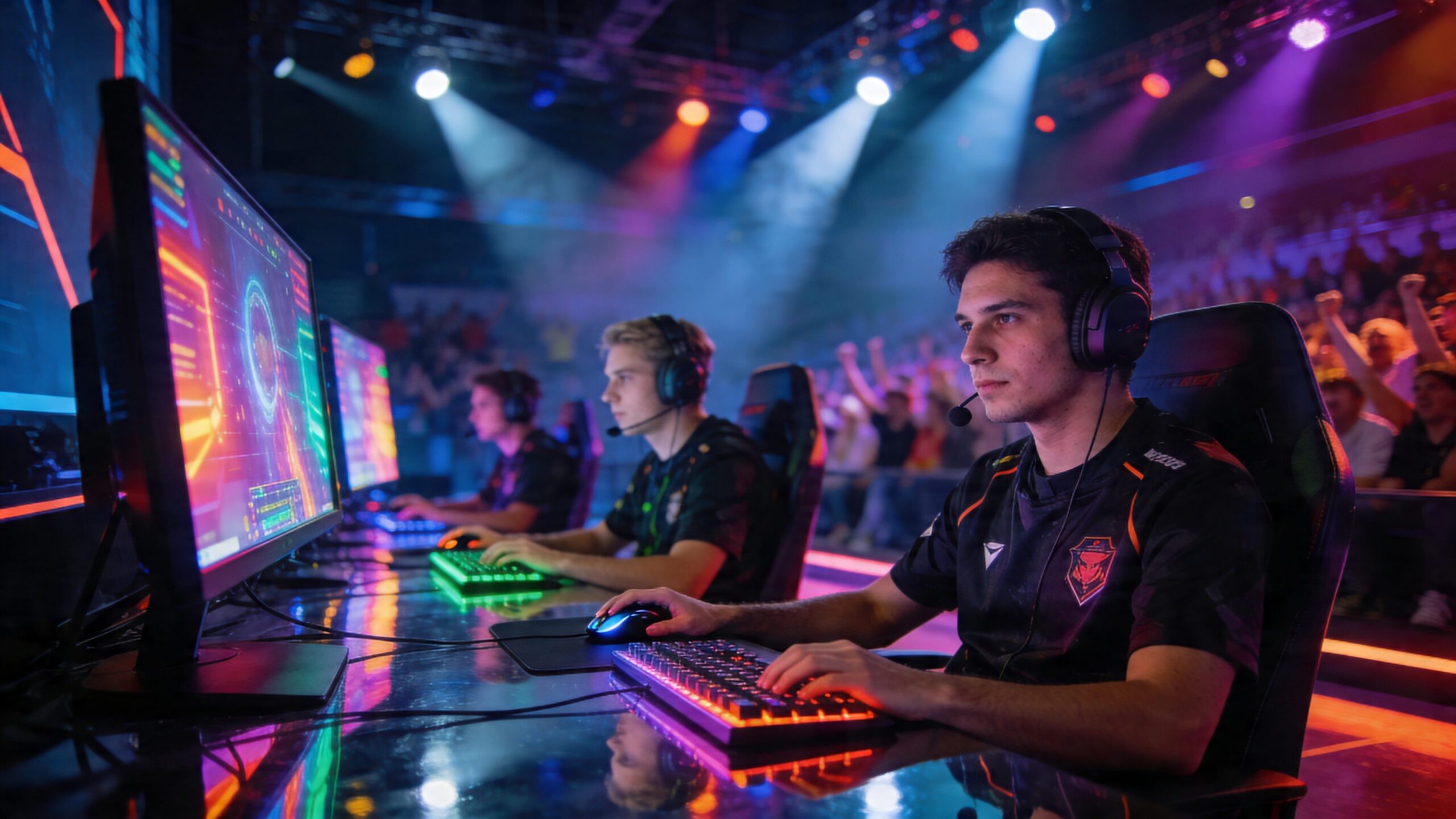
Youngest Pro Gamers Who Took Over the Esports Scene
Young pro gamers can take over an esports scene when mechanical skill, confidence, coaching, and opportunity arrive early. Their rise is exciting, but age alone does not explain dominance. Development, support, pressure, and game fit matter just as much.
A young star needs more than a birth date
A seventeen-year-old appearing in a professional match is interesting. A seventeen-year-old changing the way opponents approach a championship is something else. The teenage breakthroughs that stay in esports history combine a clear result with a performance people can revisit: a first major title, an extraordinary debut, or an event where the youngest name on the server became its central problem.
“Youngest pro gamer” can describe several different milestones. Someone might enter a roster at sixteen, win an international tournament at seventeen, and receive an individual award later that year. A list that mixes those dates produces confusing ages even when every player is real. These profiles identify the achievement beside the age, rather than presenting an absolute ranking across games with different entry rules and incomplete historical records.
Faker, SumaiL, Bugha, m0NESY, and donk offer five distinct routes into the conversation. Their stories span League of Legends, Dota 2, Fortnite, and Counter-Strike. Watching those breakthroughs is more useful than treating youth as a magical competitive advantage: the matches reveal decisions, team relationships, and tournament demands that a birthday cannot explain.
Faker arrived with a debut people could replay
Lee “Faker” Sang-hyeok made his professional debut in 2013 at sixteen. Red Bull’s retrospective interview revisits that early appearance and the attention surrounding his play. Later in the same year, he won the League of Legends world championship with SK Telecom T1. The sequence matters: the debut established a striking new player, and the title supplied a much larger competitive result.
For a newer viewer, it is tempting to compress those moments into “Faker debuted and won Worlds.” They were separate tests. An impressive first match could create excitement without proving that a rookie would endure a season, changing opponents, and a championship bracket. His 2013 story became memorable because the early promise connected to success on the biggest stage.
When watching an old mid-lane recording, follow the action around the famous play. Look at the minion wave, the opponent’s available space, and the information visible before the engagement. A highlight isolates the result; the surrounding minute helps explain why a player could attempt it. You do not need to copy an old build or assume that the same interaction works under today’s game rules to learn from the decision.
Faker’s later career gives the debut unusual historical weight. Riot named him the first inductee into its Hall of Legends in 2024. That fixed milestone is a better reference than an undated trophy count, which becomes stale whenever another season ends. The teenage entry point remains important, but its significance also comes from what followed over many years.
This is the first distinction to carry into the other profiles: becoming a famous rookie and building a lasting professional record are related achievements with different timescales. The debut deserves attention on its own, without pretending that an observer in 2013 could already know every chapter of the career ahead.
SumaiL’s International title came at sixteen
Syed “SumaiL” Hassan won The International with Evil Geniuses in August 2015. Guinness World Records records his age at that victory as sixteen years and eighty-two days. That precise description is useful because retellings sometimes confuse his early professional success at fifteen with the later championship. Fifteen and sixteen belong to different moments in the same rapid rise.
Guinness describes him as the youngest known winner of The International, noting that some earlier players’ birth dates are unknown. The qualification does real work. It ties the claim to a documented tournament record rather than declaring him the youngest champion in every esport. A specific, supported achievement is more compelling than a sweeping superlative that no single competition can establish.
Dota also makes this a team story. SumaiL’s individual impact happened inside a five-player lineup, with shared movements, information, and objectives. Watching only his kills can obscure the conditions that made those opportunities possible. In a full match, check where teammates are positioned when he commits and what the team gains after the fight finishes.
A strong sequence might secure space or force opponents to change their plans even when the immediate highlight ends without another elimination. That broader view is valuable for a player learning to assess mid-lane influence. The question becomes how a good personal start changes the team’s options, rather than whether the scoreboard contains enough kills to look impressive.
The championship at sixteen was remarkable because it happened against established international opposition in a demanding team competition. It should not become a deadline imposed on everyone else. A teenager winning this event demonstrates an exceptional historical result; it does not establish a normal age by which a Dota player must reach the professional stage.
Bugha’s World Cup demanded a solo answer
Kyle “Bugha” Giersdorf was sixteen when he won the Fortnite World Cup solo competition on July 28, 2019. Guinness records the victory, and Epic Games’ event recap confirms the $3 million solo champion’s prize. His breakthrough differs from SumaiL’s because the decisive competition placed one player’s decisions at the centre of the result.
The World Cup followed weeks of open qualifying competition. That context matters when revisiting the final: the stage contained players who had already navigated a route into the event. A young champion was not simply the most entertaining person in a casual lobby. The win came in a particular tournament format against an internationally assembled field.
Fortnite’s late-game scenes can be visually overwhelming. To watch the solo breakthrough usefully, track position before tracking eliminations. Ask how a player reaches the next playable area, what resources remain, and how much exposure a move creates. A successful outcome may depend on several earlier decisions that the final exchange cannot show by itself.
Solo competition also changes the meaning of recovery. There is no living teammate to continue the round after your elimination. At the same time, a tournament result is built over its scheduled games, so an isolated mistake does not necessarily describe the whole performance. Watch the sequence of matches before deciding that one exciting clip explains the championship.
The duo tournament at the same World Cup was a separate competition. Its winners and prize arrangement should not be blended into Bugha’s solo story. For someone following esports for the first time, this is a helpful habit: name the event mode whenever a young player’s result is discussed. “World Cup winner” alone can leave out the format that made the achievement distinctive.
m0NESY’s signing and first major award have different ages
G2 announced Ilya “m0NESY” Osipov as its starting Counter-Strike AWPer in January 2022, when he was sixteen. He had previously played in the NAVI Junior academy setting. His move therefore offered a visible transition from a developmental lineup to a senior team, rather than a story of someone materializing on a championship stage without prior competitive experience.
In December 2022, at seventeen, he earned HLTV’s MVP award at the BLAST Premier World Final, which G2 won. The signing age and the award age are both valid facts. They answer different questions: how young he was when he joined that lineup, and how young he was when an important tournament performance earned individual recognition.
An AWPer’s highlight reel naturally favours spectacular shots. A more revealing viewing exercise begins before the scope appears. Follow the route to the position, the support nearby, and the options after the first attempt. Landing a difficult shot is one skill; making that attempt without leaving the team in a hopeless situation is another part of professional play.
Also notice rounds where the weapon does not produce a clip. An opponent may avoid an angle, delay a move, or spend resources because a dangerous player could be there. You cannot attribute every defensive decision to one name without evidence, but watching those possibilities prevents an entire role from shrinking into a compilation of flicks.
The academy background makes this breakthrough particularly interesting for viewers comparing pathways. A developmental team provides a different context from open solo qualification or an immediate senior debut. That does not mean one path guarantees success. It shows why a serious profile needs the route as well as the age, and why an old G2 achievement should not be mistaken for a statement about his current roster.
donk made Katowice about the player taking the fight
Danil “donk” Kryshkovets was seventeen when Team Spirit won IEM Katowice in February 2024. The team swept FaZe in the grand final, and HLTV awarded him the event MVP. ESL’s championship report and HLTV’s own award coverage establish a breakthrough where an exceptionally young player was central to a major Counter-Strike 2 title.
His case offers a different viewing focus from the AWPer profile. Follow the first contact and the teammates positioned to support it. An aggressive rifler’s performance can look like a stream of fearless duels, but the team still has to turn those duels into useful rounds. The significance comes from repeatable impact against tournament opponents, rather than the emotional appearance of confidence.
At the Shanghai Major in December 2024, Spirit won again and donk received another HLTV MVP award. HLTV reported him as the youngest Major MVP when it announced that award. Dating the record preserves what happened without assuming that every age-related record will remain untouched forever. It also separates a Major milestone from the earlier Katowice victory.
When reading statistics from those events, check which rating system the original report used. Published metrics can change over time, and a number reproduced without its context can make comparisons look simpler than they are. The championships and award announcements supply clear historical anchors even when you choose not to compare ratings from different versions of a statistical model.
There is another small but important identification issue: this Team Spirit lineup competed in Counter-Strike. Spirit’s Dota successes belong to different players. Organization names can connect several esports under one badge, but a teenage Counter-Strike breakthrough should be credited to the actual competitor and game.
Watch the matches without turning them into a deadline
Across these five stories, the evidence takes different forms. Faker’s debut leads into a world title and a long career. SumaiL’s record has a precise championship age. Bugha wins a solo final after qualification. m0NESY moves through an academy and earns a later senior-event award. donk produces two major championship milestones within one calendar year. Their structures resist a single explanation of how young professionals emerge.
If you want to learn from a teenage star, choose one complete map or match before opening a highlights playlist. Record a few moments where the player had several plausible choices, then compare the chosen action with the information available at the time. Avoid using the spectator’s complete view to criticize a decision made with only partial information.
A useful review can include a round the star lost. Consider whether the plan was reasonable before the outcome became visible, and whether an opponent simply executed better. Learning to distinguish a sensible attempt from a successful result makes the exercise more valuable than collecting only the moments where an exceptional player appeared unbeatable.
For your own games, take one manageable observation from that review. It could be how to prepare a position, when to move after gaining an advantage, or how to make an aggressive play easier for teammates to support. The exact equipment, old patch, and professional schedule may have little relevance to your situation. The decision can still be worth studying.
Age makes these breakthroughs striking, but the lasting interest is in the performances. Give each player the correct event, date, format, and result, then watch how the match unfolds. That approach respects their achievements while leaving room for everyone else to enjoy competition, improve at a sustainable pace, and follow a career without treating its teenage beginning as a universal timetable.