Choose the kind of scarcity you want to feel
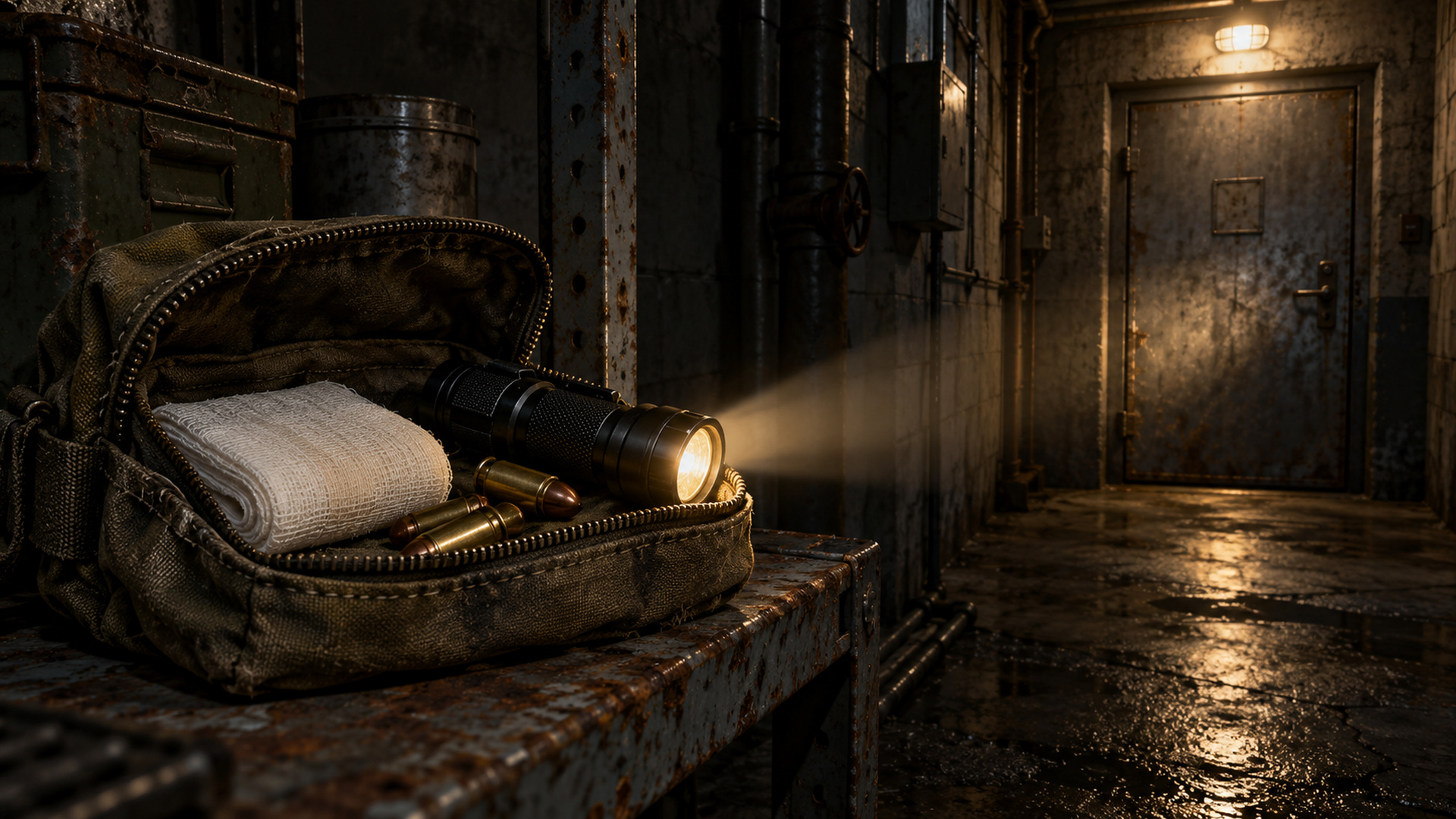
Survival horror becomes especially tense when solving the immediate problem makes the next one harder. A shot buys room but spends ammunition; another healing item occupies space that could hold a key; a slow search uses time while the lights keep burning. Resident Evil 2, SIGNALIS, Amnesia: The Bunker, and Dead Space make those pressures feel different. The recommendations here concern the 2019 Resident Evil 2 remake and the 2023 Dead Space remake alongside the named original games. They are selected for the decisions their resource systems create, with no ranking by jump-scare count. If you want panic to grow from something you chose to carry, spend, or leave unresolved, these four games offer distinct reasons to open the next door.
A: The 2019 Resident Evil 2 remake makes interconnected rooms and repeated journeys central to its resource decisions.
A: A constrained kit can make the decision about what to carry consequential before combat begins.
A: The developer’s 1.2 update added capacity options and changed the default slot treatment of two modules.
A: Generator fuel links the exploration window with the availability of lighting.
A: A tool has value when spending it addresses a problem worth the resulting resource and noise costs.
A: Additional modes change rules, so a special fuel cost should not be presented as the baseline for every playthrough.
A: Purposeful limb targeting can achieve control that panicked expenditure fails to create.
A: Its active tool-based resistance is a different appeal, so another horror style may be a better match.
A: It works when packing and returning create anticipation you enjoy, rather than only interrupting exploration.
A: A familiar title can refer to releases whose routes, mechanics, and supported options differ.
Resident Evil 2: the best fit for planning a dangerous return journey
The 2019 Resident Evil 2 remake makes the police station memorable because its rooms become part of a changing practical problem. An ordinary passage, once understood through repeated visits and newly opened connections, can be a route to a needed object, a place you have already spent ammunition, and a corridor you will have to use again. You search for access while deciding how much to spend on making that access comfortable. Capcom’s official game page identifies the remake and its protagonists; the recommendation rests on the tension between exploring that environment and keeping enough capacity to bring something useful back.
Its inventory turns an apparently ordinary pickup into a choice. Weapons, ammunition, healing, and progression items compete for limited carrying space, while storage gives you a place to reorganize. Carrying every comforting option can mean reaching an important discovery without room for it. Taking too little can make the return trip costly. This is why the station is more than a maze of locked doors. A newly opened connection can make an old destination easier to reach, changing which supplies seem worth taking and which dangerous corridor deserves attention.
Combat reinforces that planning because spending ammunition does not automatically make an area permanently comfortable. The amount of immediate control you need depends on how often you expect to use the route. A player moving through once may value an opening differently from one planning several returns. Choose Resident Evil 2 if you enjoy that developing mental map and the feeling that knowledge of the building is becoming another resource. The drawback is repetition under pressure: revisiting spaces is central to the experience, so it is a poor match if you mainly want a forward-moving procession of unrelated scares.
SIGNALIS: the strongest recommendation for a deliberately constrained kit
SIGNALIS puts classic survival-horror logistics inside a stark science-fiction mystery. Its compact inventory makes the contents of a trip matter alongside ammunition and health. You are deciding which possibilities to support before you know everything an excursion will reveal. Bringing a weapon, its ammunition, and recovery supplies can leave less room for progression objects. The consequence is an intimate kind of scarcity: the obstacle may be an item you cannot comfortably carry rather than an enemy you cannot defeat. The developer’s introduction supplies the setting without needing the story’s later revelations.
The inventory discussion needs an important version distinction. The developer’s 1.2 update announcement added capacity options and changed the default treatment of the Flashlight and Eidetic modules so they no longer occupy slots; it also added an expanded option. That changes how a recommendation about the original strict six-item arrangement should be read. Decide whether tight logistical pressure is what you want, then inspect the inventory setting in your installed version. The game is a strong pick for readers drawn to oppressive atmosphere, interconnected exploration, and small packing decisions. It is less suitable if regularly reconsidering the contents of a limited kit feels like administrative interruption rather than tension.
Amnesia: The Bunker: scarcity with an audible clock
The Bunker makes preparation frightening through fuel, noise, and uncertainty. A generator supplies lighting, and its fuel gives exploration a time pressure that is different from carrying too many objects. You can spend part of the available window investigating, hesitate in a corridor, or return with something you need for another attempt. The cost continues to matter while you are deciding. Frictional’s official product description emphasizes a reactive threat, scarce supplies, and several ways to tackle obstacles. The appeal is a hostile place whose response makes your method part of the danger.
The revolver and noisy dynamo flashlight make this especially distinctive. An action can help you see, gain access, or create temporary room while also announcing activity. That creates a genuine choice of method rather than a simple rule to conserve everything forever. A scarce tool is useful when it resolves a problem worth its cost. You might prefer a slower approach at one obstacle and a noisy expenditure at another because the remaining route, threat, and supplies differ. The bunker invites this kind of improvisation, which is why a tidy list of item locations does not describe the complete experience.
Choose it when you want resource management to feel immediate and physical. It is the most compelling selection here for someone who wants a sound or fading lighting window to influence the next decision. It can also be the most stressful if you dislike feeling hurried while exploring. Its additional modes should be distinguished from an ordinary first playthrough: the Halloween update introduced Custom and Shell Shock modes with further rule changes. Advice about fuel costs for saving or other special restrictions should therefore identify the selected mode instead of presenting every variant as the universal baseline.
Dead Space: the best choice for spending resources through precise combat
The 2023 Dead Space remake is the recommendation for someone who wants to fight back actively while still feeling the cost of the fight. Isaac’s engineering tools make target selection important: dismembering a threatening limb changes an encounter differently from firing indiscriminately into a body. The Plasma Cutter’s orientation helps connect its line-shaped shot with the target you are trying to remove. Ammunition management is therefore partly an execution problem. A carefully placed shot can accomplish a purpose that several panicked shots fail to achieve, making the way you spend a magazine as important as the quantity you brought.
Stasis and Kinesis give that combat more options. Slowing a threat can create time for a deliberate response, while manipulating an available object can provide another way to affect the encounter. Motive discusses these modules and the Plasma Cutter in its developer account of the remake’s controls and feedback. Choose Dead Space for tense, tool-based action in which maintaining control of the encounter is satisfying. It is less suited to someone whose favorite horror is prolonged helplessness. You have meaningful offensive capability; the fear comes partly from having to use it well while the ship, sound, and approaching enemies compete for attention.
These games make different things expensive
Resident Evil 2 makes a route and a return journey expensive when you have not prepared for them. SIGNALIS makes carrying capacity a central constraint, with the selected inventory option changing its severity. The Bunker makes exploration time and noise costly through its generator-and-threat relationship. Dead Space makes panicked execution expensive through wasted shots and lost control. All four can involve ammunition and recovery, but that shared vocabulary should not hide the difference. Choose the game whose particular cost sounds exciting. A player who enjoys packing a lean kit may not enjoy an exploration clock; someone who enjoys weapon precision may prefer Dead Space to a more deliberately constrained trip.
What a loaded inventory actually asks you to decide
Consider a clearly hypothetical planning situation rather than a guaranteed scene from a particular game. You intend to retrieve a progression object from a known destination. Carrying a second weapon gives you another combat response, but its associated supplies reduce the room available for discoveries. Taking additional healing protects against mistakes, while leaving more capacity open may prevent a costly return to storage. The useful choice depends on what you already know about the destination and the route, not on a universal instruction to carry the minimum.
This is why inventory friction can be enjoyable for one player and tedious for another. The pressure works when the packing decision creates anticipation and the return journey has meaning. It becomes less appealing when you mainly want to explore without logistical interruption. SIGNALIS’s updated options are especially relevant to that distinction, while Resident Evil 2 gives the developing map a prominent role in making later trips more informed. The recommendation is stronger when you can recognize which part of the process you actually enjoy, instead of assuming the strictest available setting must represent the best experience.
Pick a first playthrough rather than a challenge-run ruleset
Difficulty and resource settings change the balance between learning the environment and being punished for uncertainty. An experienced player’s lean route may assume knowledge of an item location, a safe passage, or an enemy behavior that you do not yet possess. That is useful context when deciding how to begin. You can want meaningful scarcity without choosing a mode whose appeal depends on already understanding the whole place.
The Bunker’s extra settings illustrate why precise labels matter. Its developer describes additional modes with altered systems, including saving-related fuel rules and other restrictions. A video using those conditions can make the baseline game appear to require a different plan. Similarly, a SIGNALIS inventory discussion from before the capacity update may describe a different logistical burden from the one your installed menu offers. These are substantive differences in the experience, not minor wording disputes.
For the remakes, also identify the actual release before applying advice about an older game with the same name. The 2019 Resident Evil 2 and 2023 Dead Space are the selections here. Their historical originals remain important works, but a familiar title does not make every mechanic, route, or supported option identical. Reading the product name and release year gives you a better chance of finding guidance that answers the problem in front of you. It also keeps the recommendations honest about which experience is being discussed.
Make the shortlist fit your appetite for panic
Start with Resident Evil 2 for route knowledge and a recognizable hub of connected rooms. Pick SIGNALIS for a compact kit, oppressive science-fiction atmosphere, and logistics whose strictness you can evaluate through the available options. Choose The Bunker for fuel, noise, and improvisation under a reactive threat. Choose Dead Space for precise, forceful resistance in which tools and resource use remain connected. These differences are the main buying argument, with each game’s limitation explained alongside its strength.
All four involve intense horror imagery and situations, so the product’s content description is relevant when choosing what you want to experience. Beyond that personal fit, the best selection is the one whose ordinary decisions remain interesting after the initial shock. Resource-driven panic has lasting power when you can understand the bargain: what spending buys now, what carrying excludes, and what the choice leaves waiting on the other side of the return journey.