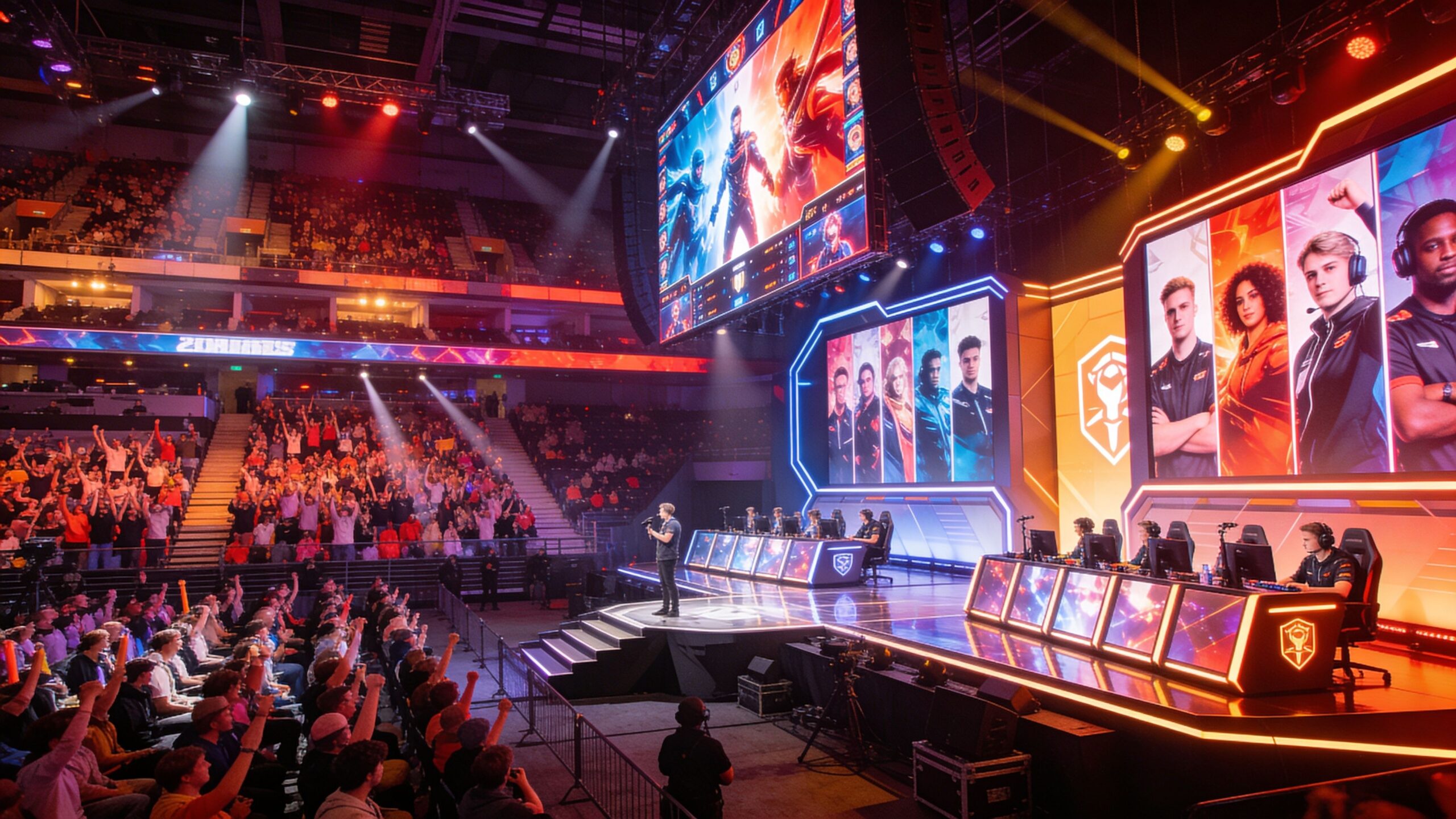
The Dream Has a Door—and It’s Usually Locked
Every esports fan has watched a player step onto a stage, headset on, crowd roaring, and thought: how do you even get there? The truth is both simpler and harsher than most people expect. There is no single “right way” into pro esports, but there is always a gate. And that gate is guarded by systems: rankings, qualifiers, eligibility rules, team selections, and schedules that punish anyone who shows up unprepared. Qualification is the invisible tournament before the tournament. It’s where most careers begin, where most runs end, and where the most talented players learn the difference between being good online and being great when something meaningful is on the line. If you understand how qualification works, you stop seeing pro esports as a mystery and start seeing it as a map—one that can be followed with the right strategy and relentless consistency.
A: In most team games, yes—some formats also include solo ladders or open cups.
A: Yes—treat them as experience, but expect tough opponents and long days.
A: Very—high rank improves visibility and often unlocks better opportunities.
A: Open is public entry; closed is limited and usually much higher level.
A: Through scrim networks, team communities, and consistent performance that attracts scouts.
A: Focus on feeder leagues, academy systems, and standout ranked performance to earn a roster spot.
A: No—reliable, consistent equipment matters more than premium upgrades.
A: Missing check-ins, roster issues, and poor mental resets after losses.
A: It varies, but most players need sustained months or years of structured practice.
A: Consistent ranked performance, match experience, and learning how to play under pressure.
The Big Picture: Most Paths Fit Into Four Qualification Models
Across esports titles, qualification usually falls into a handful of models that organizers reuse in different combinations. The first model is ladder-based: players climb ranked systems, earn top placements, and gain access to higher tiers of competition. The second is open qualifiers: anyone eligible can enter, but only the strongest survive long bracket days that feel like endurance sports. The third is circuit-based: players and teams collect points across many events, and consistency becomes more valuable than one hot weekend. The fourth is invitation or franchised access: teams are selected by organizers or permanently placed in a league, and players qualify by joining those teams.
Most real-world ecosystems use hybrids. A game might have a franchised league at the top, a second-tier circuit beneath it, and open qualifiers that feed into the circuit. Players can enter at different points, but every route demands proof—results that can’t be argued with.
Step One: Ranked Play Is Your Résumé
For many games, the ranked ladder is the first filter. It’s not just a matchmaking tool; it’s a public record of performance. High rank signals mechanics, game knowledge, and the willingness to grind. But ranked success is also a test of mental durability. Climbing requires dealing with bad games, bad teammates, streaky opponents, and the constant pressure of losing progress.
Ranked play matters because it puts you on the radar. Coaches, scouts, and semi-pro teams often start their search with leaderboards. In some titles, reaching the highest rank tiers is required to access official tournament features, third-party events, or in-game qualifier portals. Even when it isn’t required, it is still the most visible proof that you belong in higher conversations.
The mistake many aspiring players make is treating ranked as a goal rather than a foundation. The ladder doesn’t guarantee tournament success. It’s simply the place where you build habits: consistency, communication, and a style of play that holds up even when matches stop being casual.
Open Qualifiers: The Most Brutal “Welcome” in Esports
Open qualifiers are the most democratic and the most punishing path to pro tournaments. They often begin with a simple idea: if you think you’re good enough, prove it. You register, show up on time, and play through a bracket that can stretch for hours. The early rounds might feel easy, but they’re dangerous because they punish arrogance. Upsets happen when strong teams treat weaker opponents like warm-ups.
As the bracket narrows, the atmosphere changes. You’re no longer competing against random teams; you’re fighting other squads who believe this is their shot. Matches become slower, smarter, and more stressful. Teams scout opponents mid-bracket, adjust strategies between maps, and attempt to hide their best tactics until elimination matches. A single disconnect, a missed check-in, or a rule violation can end a run before it starts. Open qualifiers teach you what the pro scene values: reliability, discipline, and adaptability. They also reveal the truth about pressure. If your gameplay collapses when the stakes rise, qualifiers will expose it quickly.
Closed Qualifiers: Where “Almost Pro” Meets “Not Yet”
Closed qualifiers are the next tier—usually a smaller bracket or group stage limited to teams that earned spots through opens, rankings, or invites. If open qualifiers are a crowded battlefield, closed qualifiers are a spotlight. Opponents are stronger, scouting is deeper, and every mistake is recorded and studied.
Closed qualifiers are often where potential pros separate from future pros. The difference is rarely raw mechanics alone. It’s preparation. Teams that review opponents, build game plans, and maintain composure tend to advance. Teams that rely on “winging it” tend to disappear, no matter how talented their best player is.
Many careers are defined in closed qualifiers. A breakout performance can lead to tryout offers, roster invites, or a reputation that follows you into future events. Even if you fail, the experience teaches you how to prepare like a professional—and what your weaknesses look like under real scrutiny.
Team Tryouts: The Hidden Gateway
In many esports, especially team-based games, you don’t qualify as a solo player—you qualify as part of a roster. That means tryouts matter. Teams are constantly testing players, sometimes publicly, sometimes privately. A tryout isn’t just a skill check; it’s a chemistry test. Coaches watch how you communicate, how you react to criticism, how you handle bad games, and whether your decision-making fits the team’s identity.
Tryouts can be informal—scrims arranged through contacts—or structured, with multiple stages and evaluation criteria. Either way, the best approach is to treat tryouts like interviews. Show up early. Be coachable. Communicate clearly. Make decisions with purpose. And remember that teams are often selecting for consistency, not highlight reels. A common misconception is that tryouts are only for rising players. In reality, even established pros are evaluated through scrims, role experiments, and roster discussions. The higher you go, the more teams value stability—players who can perform at a reliable level across months, not just peak for one weekend.
Qualification Points: The Long Game of Consistency
Many modern esports ecosystems use points systems. Instead of qualifying through one bracket, teams earn points across multiple events. The system rewards consistency, forcing teams to show they belong at the top repeatedly. It also creates more storylines: a team might struggle early, then surge late, chasing the final points needed to secure a championship berth.
Points systems can be unforgiving in a different way than qualifiers. You can’t rely on one miracle run. You need repeated strong finishes. That means managing schedules, travel, fatigue, and meta changes across a season. It also means building a roster that doesn’t collapse during inevitable slumps.
For players, circuit points systems can be both a blessing and a curse. They provide multiple opportunities to prove yourself, but they also demand long-term commitment. If you’re not ready to treat competition like a season—not a weekend—you’ll struggle in point-based ecosystems.
Franchised Leagues: Qualifying Through the Team, Not the Bracket
Some of the biggest esports ecosystems feature franchised leagues, where teams hold permanent slots. In these systems, you don’t “qualify” for the league through open tournaments. You qualify by earning a roster position on an organization that already has the slot.
This shifts the pathway dramatically. Instead of grinding open qualifiers, aspiring players focus on visibility: ranked leaderboards, semi-pro leagues, community tournaments, and networking. Scouts and coaches look for players who stand out consistently, not just those who spike in one event. Player development systems—academy teams, feeder leagues, and talent pipelines—become crucial in franchised scenes. Franchised models tend to stabilize careers by making the top competition predictable and scheduled. But they can also feel harder to break into because the number of available roster spots is limited. The key is to treat the ecosystem below the top league as the true proving ground. That’s where most players build the résumé that leads to a call-up.
The Role of Eligibility Rules and “Admin Losses”
A surprising number of tournament runs die for reasons that have nothing to do with gameplay. Eligibility rules can include age minimums, residency requirements, roster lock dates, and region restrictions. Teams can be disqualified for missing check-ins, fielding ineligible players, using banned software, or violating competitive integrity rules. The professional scene values reliability. Tournament organizers are running broadcasts, schedules, and event logistics. If a team can’t follow rules, it becomes a risk. That’s why serious players learn to treat admin requirements like part of the competition. You don’t just practice mechanics—you practice being a professional: meeting deadlines, reading rules, and communicating clearly with tournament staff.
What Organizers and Scouts Actually Look For
High-level qualification is more than winning. It’s winning in a way that translates upward. Scouts and coaches watch for patterns: does a player make smart decisions under pressure, or do they chase highlights? Do they communicate effectively, or do they go silent when things go wrong? Can they play multiple roles, styles, or strategies depending on team needs?
Teams also value learning speed. In esports, the game changes constantly. Players who can adapt to patches, new metas, and evolving opponents rise faster than players who rely on one style. Coaches notice who asks good questions, who absorbs feedback, and who returns the next day improved.
Finally, there’s temperament. The higher the stakes, the more fragile teams become. A single player with poor emotional control can break communication and morale. Players who stay calm and solution-focused become invaluable—especially in qualifiers, where stress is relentless.
Turning the Map Into a Plan: A Realistic Progression
For most aspiring competitors, the pathway looks like a staircase. You start by building elite ranked consistency, then enter community or third-party tournaments to gain match experience. You join or form a team that scrims regularly, then enter open qualifiers. If you succeed, you reach closed qualifiers, where your gameplay starts getting recorded, scouted, and remembered. From there, you enter a circuit, a second-tier league, or a semi-pro ecosystem that feeds into the main stage. This progression is not guaranteed, and it isn’t fast. But it is real. Every pro scene is filled with players who climbed step by step, collecting experience and credibility along the way.
Why Qualification Is the Real Championship for Most Players
For every champion who lifts a trophy, thousands of players compete in qualifiers and never reach the main broadcast. That’s not failure—it’s the reality of elite competition. Qualification is where the pro scene selects for the traits that matter: performance under pressure, preparation, consistency, and resilience.
If you want to qualify for pro esports tournaments, your job is to treat every rung as meaningful. Ranked is training. Scrims are education. Open qualifiers are stress tests. Closed qualifiers are auditions. Circuits are careers. Worlds is legacy.
And the best part is this: the door is real. It’s locked, yes—but it’s not imaginary. It opens for players who understand the system, commit to the grind, and learn to win when it matters most.