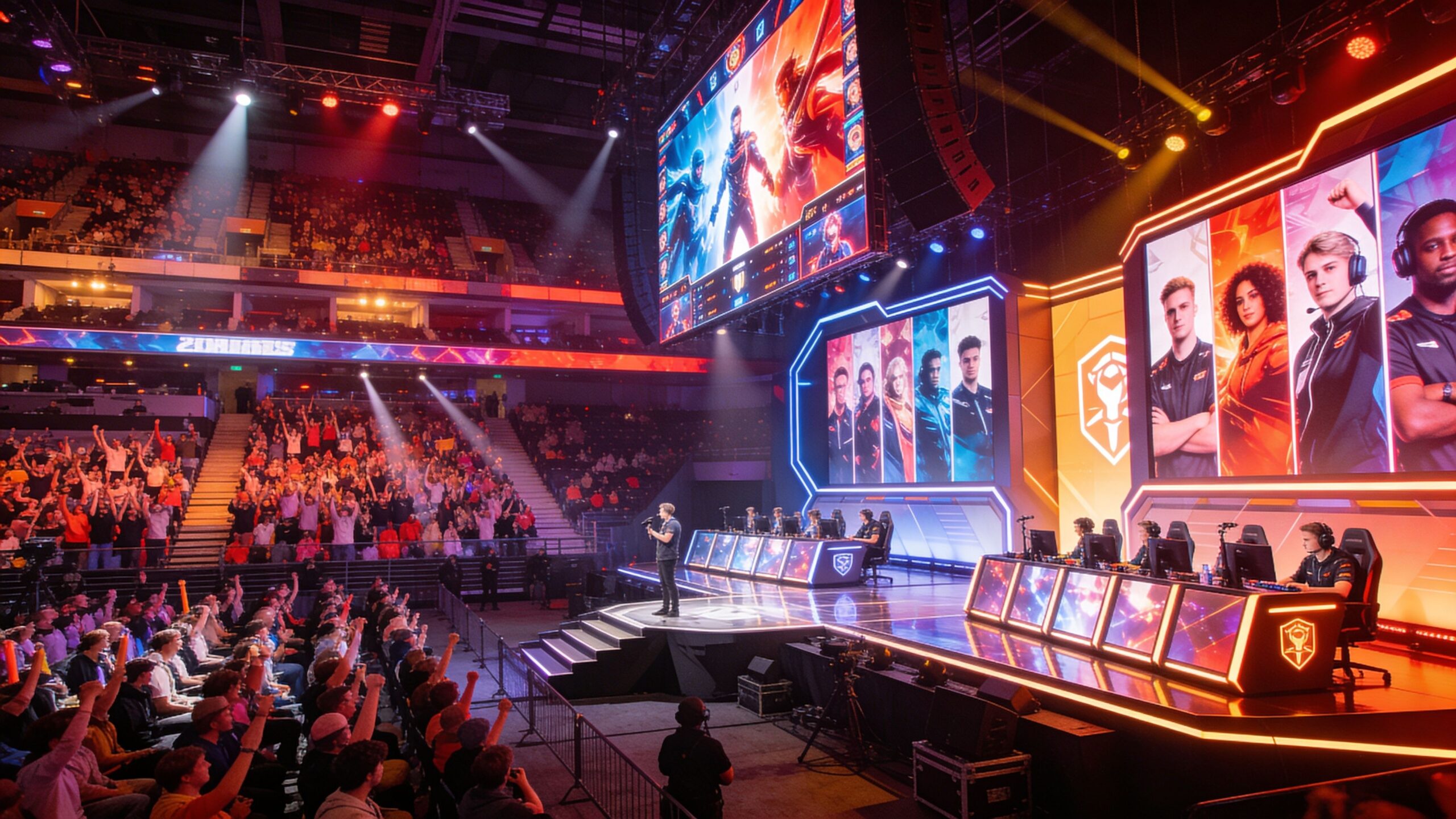
The Night the Game Becomes a World Stage
There’s a point in every esports season when the conversation changes. The daily grind of league matches, the regional drama, the heated arguments about balance patches and roster swaps—everything narrows into one towering destination: the world championship. It’s the moment competitive gaming stops feeling like a calendar and starts feeling like a story with an ending the whole scene will remember. Players don’t just chase a trophy; they chase a sentence in history. Fans don’t just watch a match; they watch a legacy unfold in real time. A world championship has a different kind of electricity than any other event. Every camera angle feels sharper. Every pause feels heavier. Every mistake looks larger, because it isn’t just a lost round or a dropped map—it’s the difference between being a champion and being a “what if.” When the world championship arrives, the game becomes a global sport for a few weeks, and the champions become cultural landmarks inside their communities.
A: Through league standings, championship points, regional playoffs, or open qualifiers depending on the game.
A: Groups test consistency across multiple matches; playoffs are elimination rounds for the title.
A: Patches, scrim discoveries, and international style clashes can reshape strategies quickly.
A: Most major finals are, but earlier stages may vary by location and format.
A: Seeding ranks teams to structure matchups, influencing difficulty and bracket paths.
A: Yes, support staff prepare drafts, scouting, and mental routines.
A: Not always—some games use double elimination or mixed formats to balance fairness and drama.
A: It can range from several days to multiple weeks depending on the game and stages.
A: Legacy, contracts, sponsorship value, and career-defining reputation.
A: Worlds compresses a full season into a short window where every edge matters.
What “World Championship” Really Means in Esports
Unlike traditional sports, esports doesn’t have one universal world championship. Each major game builds its own ecosystem, its own seasonal rhythm, and its own path to a final, definitive event. In some titles, the world championship is the peak of a structured league system. In others, it is the climax of a circuit built around international tournaments. Some world championships are run by publishers with centralized rules and franchises. Others are shaped by third-party organizers and open qualification routes.
But across games, a world championship almost always means the same thing: the highest level of competition that year, featuring the best teams from the most competitive regions, under the most intense conditions. It is the tournament where excuses run out. Everyone has a shot at greatness, and only one team leaves as the answer to the season’s biggest question.
The Road to Worlds: How Teams Earn Their Place
To understand a world championship, you have to start months earlier—when it’s not glamorous, when the stage lights are still far away, and when teams are building their season from scratch. Qualification is the hidden foundation of every world championship. It’s the filter that turns a global player base into a small list of contenders who have survived the year.
Most esports world championships draw teams from multiple regions, and those regions have their own paths. Some use regular-season standings and playoff performance. Others use a points system that rewards consistent placements across many events. Some rely on regional qualifiers where everything comes down to one do-or-die series. This is where heartbreak begins early: superstar rosters can miss worlds by a single match, and unexpected teams can sneak in and become the story of the tournament.
What makes qualification so powerful is that it creates narrative. By the time teams arrive at worlds, they’re carrying their region’s expectations, their own internal pressure, and the history of what it took to get there. Worlds is never just “the best teams.” It’s also “the teams that survived.”
Formats That Shape Destiny: Groups, Swiss, and Brackets
World championship formats are designed to answer two competing needs: crown the best team and keep the event thrilling. The structure matters because it determines who gets momentum, who gets punished by early matchups, and who has room to recover.
Many championships begin with a preliminary phase—often a play-in stage or a qualification round inside the event. This phase separates teams that arrive as favorites from those who arrive as challengers. It also gives fans their first taste of international style clashes: different approaches to strategy, pacing, drafting, and risk.
From there, many worlds events use a group stage. Group stages are where champions are tested for consistency. One-off brilliance is not enough. Teams must win across multiple opponents and adapt quickly when the meta shifts. Some events use round-robin groups. Others use a Swiss-style phase, where teams face opponents with similar records, creating a pressure cooker of progressively tougher matches.
Finally, there is the playoff bracket. This is the purest form of worlds pressure: win and continue, lose and disappear. Some championships use single elimination, making every series an instant legacy moment. Others use double elimination, allowing one loss but demanding resilience and endurance. Either way, playoffs turn every series into a referendum on greatness.
The Hidden Engine: Seeding, Draws, and Competitive Geography
Fans often focus on players, but world championships are also shaped by systems: seeding rules, regional distribution, and bracket draws. Seeding is how the tournament tries to reward stronger performance from earlier phases or stronger regional results during the season. The goal is competitive balance, but the outcome can be dramatic. A tough draw can place two favorites on the same side of the bracket, turning one semifinal into the “real final” long before the trophy match.
Regional geography matters too. Esports has powerhouse regions that traditionally dominate certain games, along with rising regions that constantly hunt the upset. Worlds formats often try to prevent teams from the same region from eliminating each other too early, because international matchups are a major part of the show. When the system works, it produces the most exciting kind of bracket: one that builds toward cross-regional clashes at the end.
Team Identity at Worlds: More Than Five Players
At the world championship level, “team” is bigger than the roster on stage. Behind every lineup is a full operation: coaches shaping strategy, analysts breaking down opponent tendencies, managers handling logistics, and support staff keeping the roster stable under stress. The best organizations treat worlds like a military campaign. They scout, prepare contingencies, and build routines that keep players calm when everything feels chaotic.
Team identity also becomes sharper at worlds. Some teams are defined by aggression—fast tempo, relentless pressure, forcing mistakes. Others are methodical, built around discipline, resource control, and late-game execution. In tactical shooters, some teams thrive on set plays and rehearsed utility usage, while others lean on reactive reads and confident aim.
World championships are the stage where those identities collide. And when the clash is perfect—when two teams represent opposite philosophies—the series becomes unforgettable.
The Meta Wars: Why Worlds Rarely Looks Like the Regular Season
Esports is uniquely sensitive to change. Patches, balance updates, and evolving strategies can rewrite the game right before the championship begins. This is why world championships often have their own “meta,” their own defining strategies that fans remember for years. A playstyle that worked in spring might collapse in October. A once-ignored character, weapon, or strategy might become the centerpiece of a champion’s run.
This is part of what makes worlds so dramatic. The best teams aren’t just the most talented—they’re often the fastest learners. They arrive prepared, but they also arrive flexible, able to rebuild their identity on the fly. Worlds champions tend to be masters of adaptation, teams that can solve the tournament’s puzzle faster than everyone else.
The Stakes: Money, Contracts, and a Year of Work on One Stage
The most obvious stakes at a world championship are the prizes. A major win can award enormous money, but the deeper stakes run beyond the check. Worlds changes careers. A breakout performance can turn a promising player into a superstar. A deep run can increase a team’s value, attract sponsors, and reshape an organization’s future.
Contracts are affected too. Worlds is often the stage where scouting and roster decisions accelerate. Players who shine under pressure become highly sought-after. Players who collapse may face harsher scrutiny. Even coaches and analysts can build reputations during a single tournament, because preparation and adaptation are so visible at the highest level.
And then there is the most powerful stake of all: time. A season can be eight months of training and travel, with thousands of hours of practice and sacrifice. Worlds compresses all of that into a short window where everything must work. That’s why players say it feels like a final exam written in front of the entire world.
The Crowd, The Broadcast, and The Theater of Competition
World championships are as much about presentation as competition. Big finals often take place in massive venues, and the crowd changes everything. The roar after a clutch play can hit players like a physical wave. The silence after a mistake can feel louder than any chant. Some competitors thrive in that environment, using adrenaline as fuel. Others need calm routines to stay grounded.
Broadcast production has also become a defining feature. High-level camera work, live analysis, story packages, player interviews, and pre-match segments turn worlds into an entertainment experience that draws in casual viewers. The best broadcasts teach fans how to watch the game at a deeper level, explaining strategy and stakes without slowing down the excitement. In the modern era, worlds isn’t just a tournament—it’s a show. And that show is part of why esports keeps expanding.
The Moment That Makes Legends
Every world championship eventually produces a moment that outlives the event itself: a comeback that shouldn’t be possible, a clutch play under maximum pressure, a rookie outperforming veterans, or a powerhouse finally being dethroned. Those moments become the language of fandom. Years later, people still reference them as shortcuts to emotion: “Remember that final?” “Remember that map?” “Remember that play?” Legends are built on these moments because they happen when the stakes are highest. Winning a regular-season match is impressive. Winning at worlds is mythology.
Why Worlds Keeps Growing
Esports world championships keep growing because they satisfy something people crave: a global contest with clear meaning. In a world filled with endless content, worlds is a rare moment of focus. One trophy. One champion. One storyline that the entire community shares.
For players, it’s a dream with a deadline. For fans, it’s the peak of the year. For the industry, it’s proof that competitive gaming can deliver the same intensity, spectacle, and emotional payoff as any major sport.
And as new games rise and new regions develop, the idea of “world championship” continues to expand. The structure may change. The teams will change. The meta will change. But the feeling—the sense that the entire world is watching one match that matters more than any other—stays the same.